Physical Address
304 North Cardinal St.
Dorchester Center, MA 02124
Physical Address
304 North Cardinal St.
Dorchester Center, MA 02124


Have you ever:
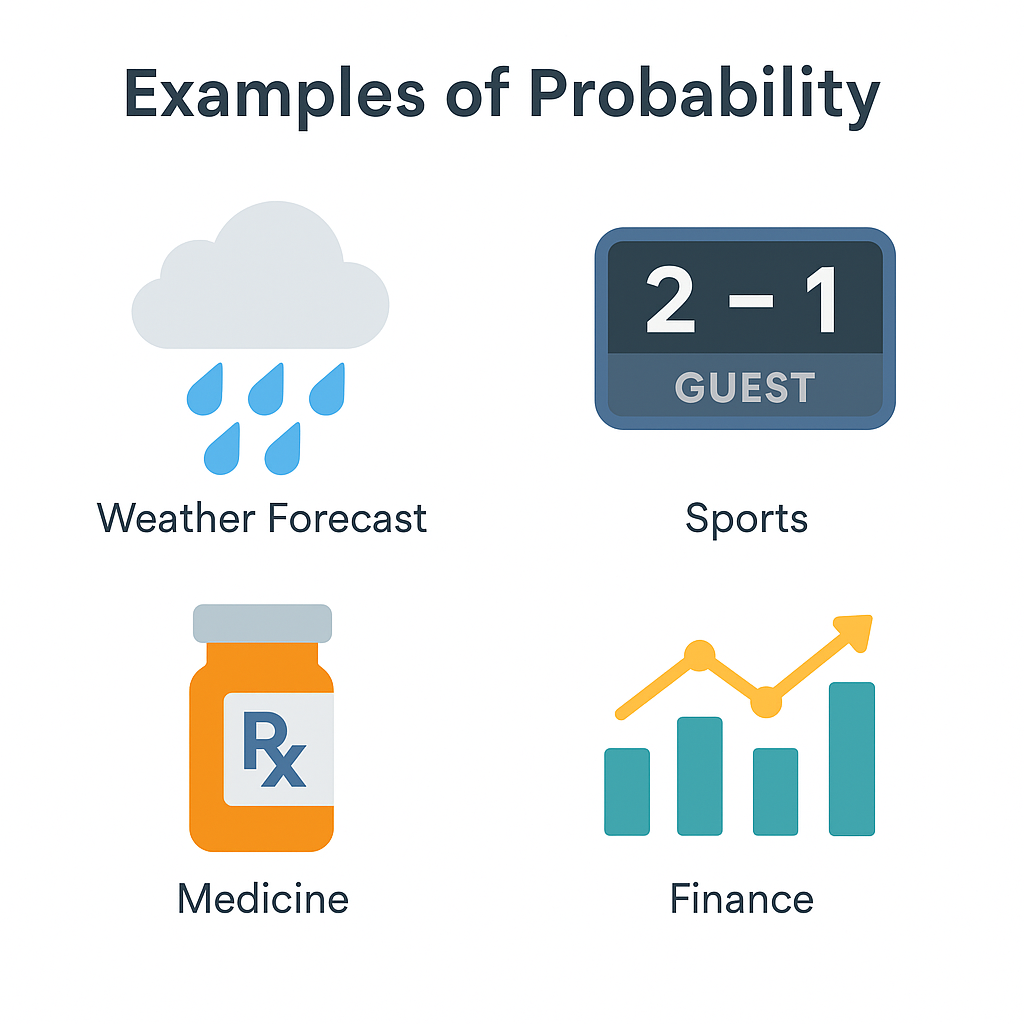
Whether we realize it or not, probability influences our daily lives. It’s the science of measuring uncertainty and making informed decisions. From predicting rain to estimating business risks, probability is everywhere.
Mathematically, probability is expressed as:
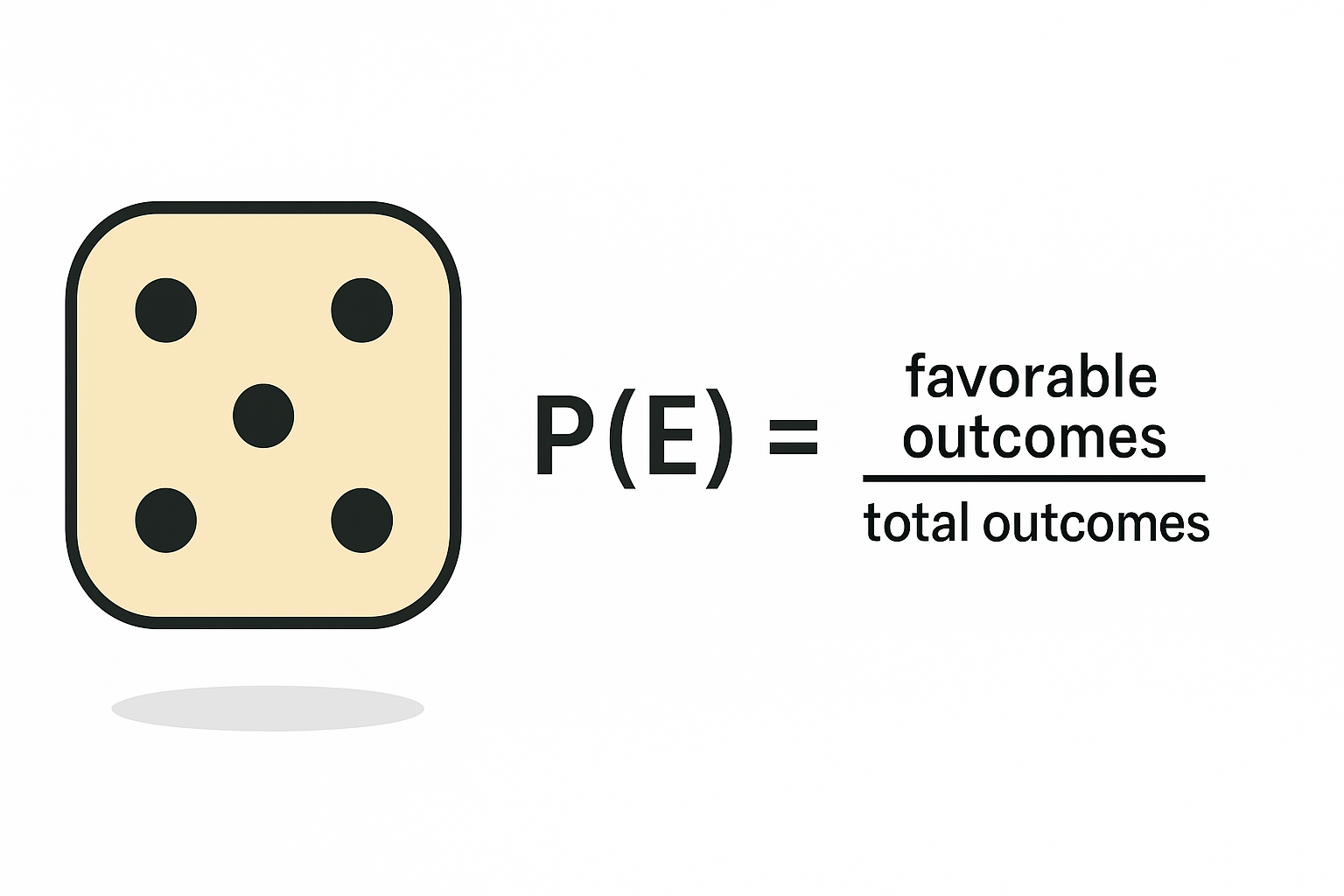
Formula:
\[ P(E) = \frac{\text{Number of favorable outcomes}}{\text{Total number of possible outcomes}} \]
Example:
If you roll a fair die, the probability of getting a “4” is:
\[ P(4) = \frac{1}{6} \approx 0.167 \ (16.7\%) \]
Probability isn’t one-size-fits-all. It can be classified into three main types:
Moving from guesswork to precision involves:
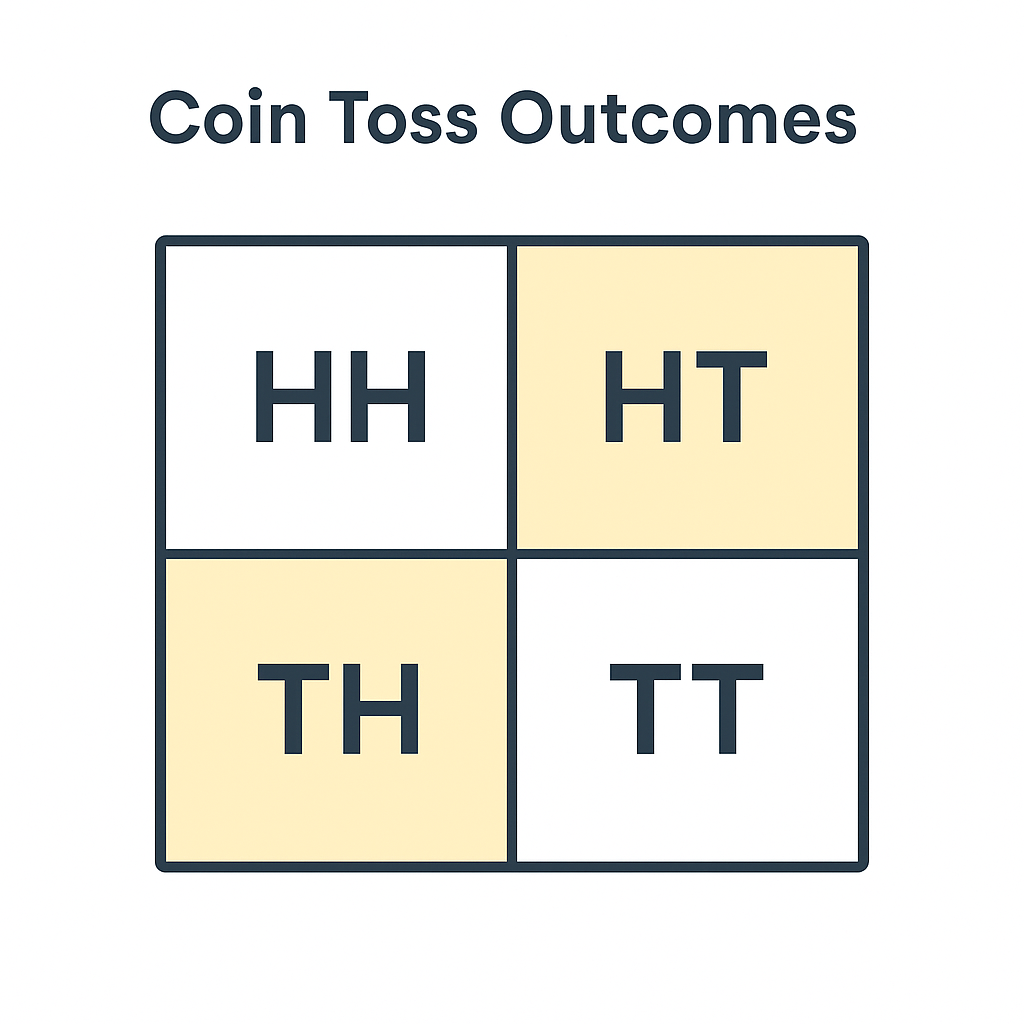
Example:
Tossing two coins — outcomes: HH, HT, TH, TT.
Probability of exactly one head =
\[ P(\text{One head}) = \frac{2}{4} = 0.5 \]
Answers:
1. \( \frac{3}{8} \)
2. \( \frac{1}{36} \)
Probability bridges everyday intuition with mathematical accuracy. By understanding it, you can make smarter decisions in both personal and professional life.


